Thinking about cadets for your child but not quite sure where to start?
You're not alone. From figuring out the difference between the ACF and CCF to wondering what happens on a parade night, what kit they'll need and how much of your weekend is about to disappear, there's plenty for parents to get their heads around.
With the first National Cadets Week taking place from 5–11 October 2026, there's never been a better time to find out what cadet life is really about.
The good news? You don't need to know your fieldcraft from your foot drill to get started. Here's what parents need to know.
ACF or CCF: Which Cadet Force Can My Child Join?
If your child is interested in Army Cadets, you'll probably come across two abbreviations pretty quickly: ACF and CCF.
Army Cadet Force (ACF)
The Army Cadet Force operates through local detachments across the UK and isn't linked to the school your child attends.
You can search for your nearest detachment using your postcode and contact them about joining. The Army Cadet Force operates through local detachments across the UK and isn't linked to the school your child attends. With around 40,000 cadets nationwide, it is one of the UK's leading youth development organisations, offering a structured syllabus designed to build confidence, leadership, teamwork and practical skills.
Training follows the Army Cadet syllabus, supported through the Reserve Forces' and Cadets' Associations (RFCA), giving young people the opportunity to progress through different levels as their skills and experience grow
Best for: Young people looking to join cadets within their local community.
Combined Cadet Force (CCF)
The Combined Cadet Force operates within participating schools, with contingents potentially including Army, Royal Navy and Royal Air Force sections.
If your child's school has a CCF, speak to the school directly about availability, joining requirements and when they recruit new cadets.
Best for: Pupils who have access to a CCF through their school.
What Actually Happens at Cadets?
Probably quite a lot more than you think.
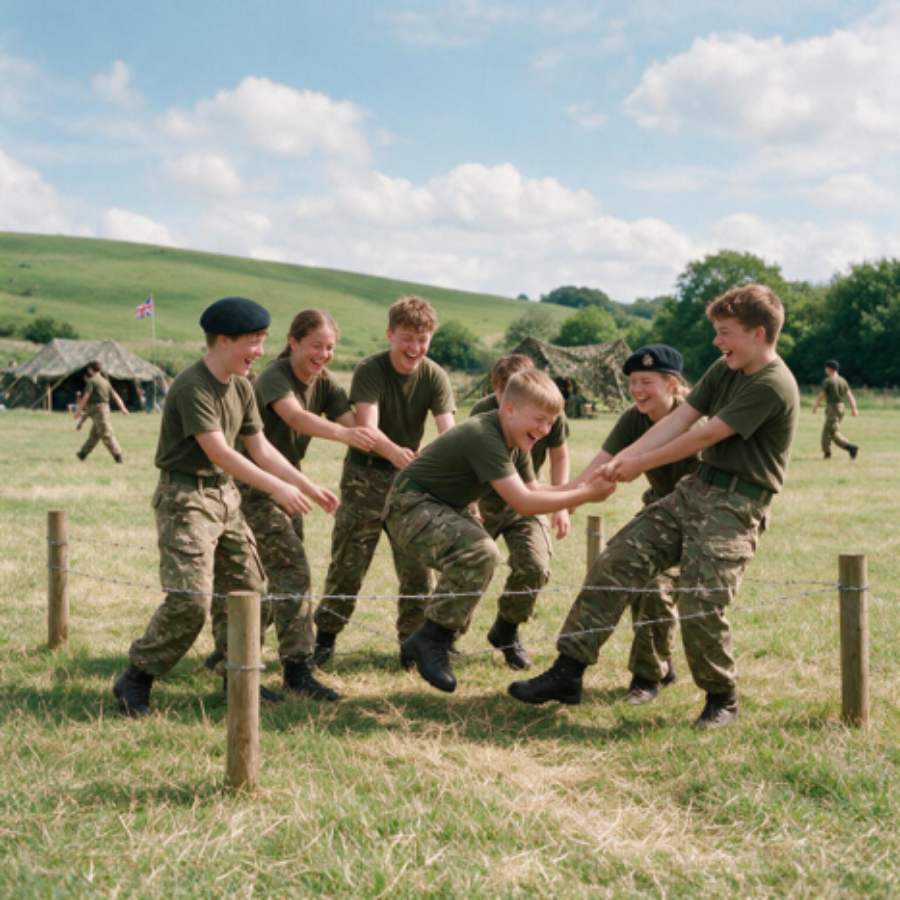
Regular training evenings, usually known as parade nights, form the backbone of cadet life. The exact programme varies, so no two weeks necessarily look the same.
Cadets can find themselves learning:
- First aid
- Map reading and navigation
- Fieldcraft
- Drill and ceremonial skills
- Leadership
- Teamwork
- Physical training
- Expedition skills
- Music
- Community and citizenship skills
There are also opportunities to take part in weekend training, competitions, adventure activities, courses and residential camps.
For new cadets, those first few parade nights are also an opportunity to settle in, meet people and discover what they enjoy.
And don't worry if your child isn't particularly confident when they walk through the door. Developing that confidence is rather the point.
What Should They Expect on Their First Parade Night?
First-night nerves are completely normal, for parents as well as cadets!
Nobody expects a new cadet to arrive knowing how to march, salute, read a map or understand all the terminology.
New cadets are introduced to training gradually and given the chance to learn alongside others. The focus is on getting involved, learning new skills and becoming part of the detachment.
If there's anything you're unsure about beforehand, ask. Your child's detachment or school contingent should be your first port of call for specific requirements.
What Will Parents Usually Need to Buy?
While the core uniform is generally issued by your child's unit, there are some personal items that parents will usually need to buy themselves.
Exactly what's required can vary between detachments and contingents, so always check before you start shopping. However, common purchases include:
- Cadet boots – A comfortable, durable pair of suitable boots is one of the most important pieces of personal kit.
- Boot polishing kit – They'll soon learn that looking after those boots is all part of cadet life!
- Dark military-style socks – Good socks can make a surprisingly big difference during long days on their feet.
- Base layers – Useful for staying warm during colder training nights, camps and outdoor activities.
- Waterproof clothing – Because training doesn't necessarily stop when the Great British weather arrives.
- Gloves and cold-weather accessories – Particularly useful for winter parade nights and early starts.
- Water bottle – A simple essential for keeping hydrated during training and activities.
Don't feel you need to buy everything before that first parade night. Find out what your child's unit requires and start with the essentials.
What Kit Would We Recommend?
Once your child settles into cadet life, starts attending weekend training and gets their first camps in the diary, there are a few additional pieces of personal kit that can make things much easier.
A daysack or rucksack gives them somewhere practical to organise and carry their kit, while dry bags are well worth having for keeping clothing and essentials organised and protected from wet weather.
For camps and field exercises, good base layers, spare socks, gloves and waterproofs can make a big difference to comfort, particularly when the weather isn't playing ball. A reliable water bottle and carrier also makes staying hydrated much easier when they're on the move.
As they gain experience, you can gradually add other field, camping and adventure training essentials based on the activities they actually take part in.
Our advice is simple: start with the essentials, invest in kit that will last and build from there as your cadet gains experience.
There's no need to arrive on day one equipped for a week in the field. You'll soon discover which bits of kit become the ones they never want to leave home without.
How Much Time Does Cadets Take?
For ACF cadets, regular parade nights typically take place once or twice a week, with a session lasting around two hours.
Then there are the extras.
Depending on how involved your child wants to become, there may be weekend camps, competitions, courses, expeditions, adventure training and Annual Camp during the school holidays.
And yes, parents, you read that correctly: residential activities during the school summer break!
We couldn't possibly call it great-value childcare... but we're sure the thought may have crossed your mind.
These residential camps typically last around one week and give cadets the chance to put their skills into practice, try new activities and spend time with cadets from outside their usual detachment.
They're also remarkably affordable. Annual Camp will typically cost around £30–£50 per cadet, with accommodation, food and activities included, making it a fantastic-value opportunity for young people to enjoy a week packed with training, challenges and new experiences.
Many of these additional opportunities are optional, so cadets can get more involved as their confidence, experience and interests develop.
What Will My Child Get Out of Cadets?
This is where cadet life really comes into its own.
Yes, they'll learn practical skills. But they'll also have opportunities to develop the sort of skills that can stay with them long after they've hung up their uniform.
Think:
- Confidence
- Independence
- Leadership
- Communication
- Teamwork
- Resilience
- Responsibility
- Problem-solving
Cadets can also work towards recognised achievements and qualifications, with opportunities including first aid qualifications, vocational qualifications and the Duke of Edinburgh's Award.
Those experiences can prove useful later when they're putting together their first CV, applying to college or university, looking for an apprenticeship or going for their first job.
Does Joining Cadets Mean Joining the Army?
No.
This is another question parents understandably ask.
Being an Army Cadet does not mean your child is committing to joining the Armed Forces when they're older.
Cadets is a youth organisation designed to provide young people with experiences, skills, friendships and opportunities.
Some cadets may eventually decide that a military career is for them. Plenty won't.
Either way, the skills they've developed along the way still count.
What If My Child Is Shy or Doesn't Know Anyone?
That's absolutely fine.
In fact, making new friends and building confidence are two of the biggest benefits many young people get from cadets.
Walking into a new group for the first time can be daunting, particularly if your child doesn't know anybody there. Give them a little time to settle in and encourage them to get involved.
Before long, the person nervous about their first parade night could be the one welcoming the next new cadet through the door.
Is Joining Cadets Right for My Child?
There's no single "type" of person who makes a good cadet.
If your child likes being outdoors, brilliant. If they're interested in first aid, sport, music or leadership, there are opportunities for those too.
Cadets can particularly appeal to young people who enjoy:
- Outdoor adventures
- Learning practical skills
- Making new friends
- Being part of a team
- Taking on responsibility
- Challenging themselves
- Trying things they wouldn't normally get to do
They don't need to arrive confident, super sporty or knowing anything about military life.
They just need to be willing to give it a go.
At Cadet Kit Shop, we're here for everything from that first pair of cadet boots to Annual Camp and beyond - Ready when they are.