
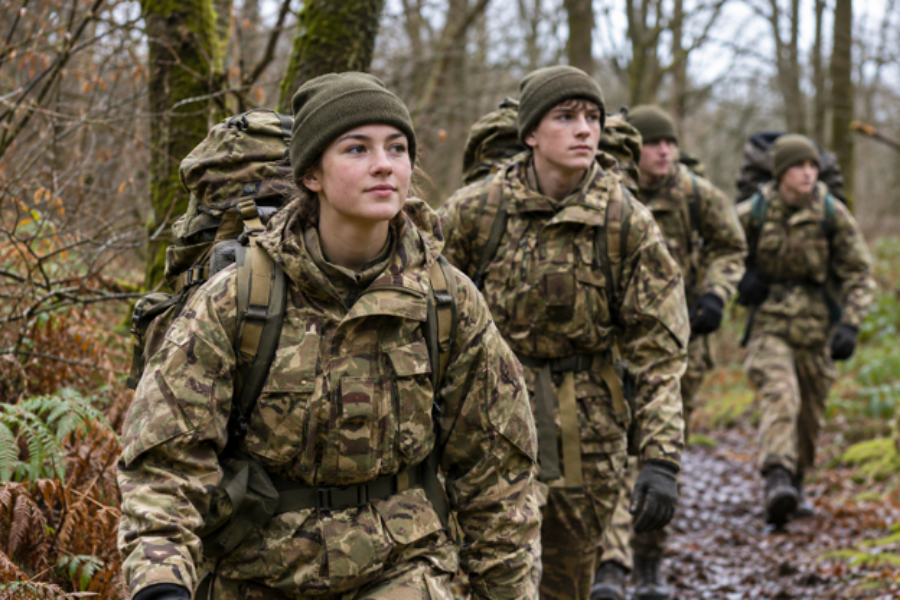
Cold weather doesn't have to put a stop to cadet adventures. With the right preparation and equipment, winter fieldcraft can be just as rewarding as activities during the warmer months.
From early morning exercises to long days spent outdoors, winter brings its own challenges. Falling temperatures, wet ground, unpredictable weather and shorter daylight hours can all make a difference to how comfortable you feel in the field.
Whether you're preparing for your first winter exercise or you've already got a few camps under your belt, knowing how to dress, what to pack and how to look after your equipment can help you make the most of every activity.
Here are our top tips for getting your cadet kit winter-ready.
1. Layer Up for Changing Conditions
When it comes to staying warm outdoors, wearing several suitable layers is generally more effective than relying on one thick jacket.
The key is to choose clothing that helps regulate your temperature, keeps moisture away from your skin and provides protection against the elements.
A good layering system typically includes:
- Base layer: Worn closest to the skin, this should help move perspiration away from your body. Moisture-wicking materials are usually a better choice than cotton, which can stay damp.
- Mid layer: A fleece or other insulating layer helps retain warmth, particularly during periods of low activity.
- Outer layer: A windproof and waterproof jacket provides protection from rain, wind and changing weather conditions.
Remember that fieldcraft often involves alternating between physical activity and periods of remaining still. Being able to add or remove layers helps you stay comfortable without overheating.
Always check your unit's uniform and clothing requirements before heading out.
2. Keep Your Feet Warm and Dry
Cold, wet feet can quickly turn an enjoyable field exercise into an uncomfortable experience.
Good-quality boots are an important part of your winter kit, particularly when you're walking across muddy ground, uneven terrain or wet grass.
When choosing boots, think about:
- Fit: Your boots should provide support without being too tight, particularly when worn with suitable socks.
- Grip: A sturdy sole with appropriate traction can help when navigating slippery or uneven ground.
- Water resistance: Boots suited to wet conditions can help protect your feet from rain and damp ground.
- Comfort: Make sure you've worn your boots before a longer exercise rather than taking a brand-new pair straight into the field.
Socks matter too. Choose suitable moisture-managing socks and pack a spare dry pair in a waterproof bag.
If your boots do get wet, allow them to dry naturally and follow the manufacturer's care instructions. Avoid placing them directly against radiators or other intense heat sources, which can damage some materials.
Looking to upgrade your footwear? Explore our boots and footwear collection for options suited to cadet activities.
3. Don't Underestimate Waterproof Clothing
British winter weather is rarely predictable. A dry morning can quickly become a wet afternoon, and even light rain can leave clothing uncomfortable after several hours outdoors.
Waterproof clothing is therefore an important consideration when preparing for fieldcraft.
A suitable waterproof jacket or outer layer can help protect you from rain and wind, while waterproof trousers or a poncho may provide additional protection depending on the activity.
It's also worth thinking about how you'll store wet clothing once the rain stops. Keeping damp items separate from dry kit helps prevent moisture spreading through your bag.
Before purchasing waterproof clothing, check whether your unit has specific requirements for colours, camouflage patterns or permitted equipment.
You can explore our range of field kit and accessories when preparing for your next exercise.
4. Remember the Smaller Winter Essentials
It's easy to concentrate on boots, jackets and larger equipment, but some of the smallest items can make a noticeable difference during cold-weather activities.
A few useful additions to consider include:
- Gloves: Help protect your hands from cold conditions, particularly during periods of inactivity.
- Warm headwear: Suitable hats can help retain warmth when permitted by your unit.
- Spare socks: Useful if your feet become wet during an exercise.
- A waterproof bag or dry bag: Helps protect spare clothing and other essentials.
- A suitable torch or head torch: Particularly useful during the shorter daylight hours, where permitted.
- A spare insulating layer: Provides additional warmth when activity levels drop.
It's worth checking what you already own before buying anything new. You may only need a few additional items to make your existing kit more suitable for winter.
5. Pack Your Bergan Properly
When you're carrying your kit for several hours, how you pack can be just as important as what you bring.
A well-organised bergan or rucksack makes it easier to find equipment when you need it, while helping protect your belongings from wet weather.
Start by checking the packing list provided by your unit. Then consider these simple tips:
Keep essential items accessible. Waterproofs, gloves and other frequently needed equipment should be easy to reach without emptying your entire bag.
Protect clothing from moisture. Use suitable waterproof liners or dry bags to keep spare layers and socks dry.
Distribute weight carefully. Pack heavier equipment securely and close to your back where appropriate, following the guidance for your particular bag.
Avoid unnecessary extras. Carrying too much can make an exercise more tiring than it needs to be.
Check your bag before leaving. Make sure straps, buckles and zips are working properly.
If you're considering a new bag, take a look at our bergans, rucksacks and carriage equipment.
6. Look After Your Kit Between Exercises
Winter conditions can be tough on clothing and equipment, particularly when mud, rain and damp ground are involved.
Taking a little time to look after your kit after each exercise can help keep it in good condition for longer.
When you get home:
- Remove muddy clothing and footwear as soon as possible.
- Clean boots according to the manufacturer's instructions.
- Allow wet clothing and equipment to dry thoroughly before storing.
- Check waterproof garments for damage or signs of wear.
- Empty your bergan and make sure nothing damp has been left inside.
- Replace worn or damaged items before your next activity.
It's also worth checking your uniform and field equipment a few days before your next exercise, rather than discovering a problem while you're packing the night before.
7. Know When the Cold Is Becoming a Problem
Being prepared for winter fieldcraft isn't just about staying comfortable. It's also about recognising when weather conditions could affect your safety.
Cold temperatures, wet clothing and strong winds can increase the risk of cold-related illness, particularly when you're outdoors for extended periods.
If you experience persistent shivering, unusual tiredness, numbness, confusion or difficulty staying warm, tell an instructor immediately.
Make sure you eat and drink as directed during activities, take advantage of opportunities to warm up and change into dry clothing when necessary.
Most importantly, always follow your unit's safety guidance and instructions. If conditions become unsafe, the priority is your wellbeing, not completing the exercise.
Ready for Your Next Winter Adventure?
Winter fieldcraft can be a fantastic opportunity to develop confidence, resilience and practical outdoor skills. And with the right preparation, there's no reason why colder weather should take the enjoyment out of it.
From comfortable boots and waterproof clothing to well-organised bergans and those all-important spare socks, getting your kit ready beforehand can make a real difference.
Whether you're heading out for a weekend exercise or simply preparing for the colder months ahead, now is a good time to check what you've got and identify anything that needs replacing.
Get Winter-Ready for Less This Black Friday!
There's never been a better time to stock up on your winter cadet essentials!
Our biggest Black Friday sale yet is just around the corner, with 25% OFF storewide from Friday 27 November to Monday 30 November.
From boots and waterproofs to bergans, gloves and field kit, it's the perfect opportunity to get equipped for your next winter adventure while saving on the essentials.
Use code BFCM25 at checkout.
Offer ends at 11:59pm on Monday 30 November 2026.